🇮🇹 Leggi questo articolo in italiano
“C’è una banca qui vicino?” – “Sì, ci sono due banche in centro.” These are among the first sentences you use when you arrive in a new town, yet c’è and ci sono trip up even students who have been learning Italian for months. Do we say “c’è due libri” or “ci sono due libri”? When do you need “è” and when “c’è”? Here you will find the basic rule, how the forms change in the past and future, the difference from è and sono, the most frequent mistakes, and a dialogue with exercises and answers. For the meaning of ci I rely on the Treccani Vocabolario and on an answer from the Treccani language desk (sources at the end); examples, exercises and advice come from my own teaching experience.
What c’è and ci sono mean
They say that something or someone exists or is located somewhere: C’è un bar in piazza. Ci sono molti turisti. In English they correspond to there is and there are. The Treccani Vocabolario describes exactly this use of the particle ci: combined with the verb essere it indicates the existence of people or things, or their being in a place. The entry’s examples are very clear: c’è qualcuno in casa? (is anyone home?), c’è ancora tempo (there is still time), ci sono moltissime specie di animali e di piante (there are very many species of animals and plants).
The basic rule: singular and plural
| What is there? | Form | Example |
|---|---|---|
| one thing or person (singular) | c’è | C’è un parco vicino a casa mia. |
| more than one thing or person (plural) | ci sono | Ci sono tre bar in questa strada. |
| a substance or an uncountable quantity | c’è | C’è molto traffico. C’è ancora un po’ di caffè. |
C’è is the contraction of ci + è: before a vowel the i drops and an apostrophe takes its place. Remember the accent on the è: without it, c’e is not an Italian word.
The verb agrees with the thing that exists, that is, with the subject that follows: C’è una pizza. Ci sono due pizze. The Treccani language desk (31 July 2017), answering a question about the form se c’erano, confirms that sentences with ci and the verb essere are very common and now fully part of contemporary Italian, with examples such as ci sono le sedie (there are chairs) and ci siamo tutti? (are we all here?).
Negatives and questions
- Negative: Non c’è il latte. Non ci sono fermate qui.
- Direct question: C’è una farmacia qui vicino? Ci sono posti liberi?
- Quantity: Quanti studenti ci sono? Quanta gente c’è?
- Open question: Cosa c’è da mangiare? Che cosa c’è in frigo?
Past and future: c’era, c’erano, ci sarà, ci saranno
| Tense | Singular | Plural |
|---|---|---|
| present | c’è | ci sono |
| imperfect (description in the past) | c’era | c’erano |
| present perfect | c’è stato | ci sono stati |
| future | ci sarà | ci saranno |
| conditional | ci sarebbe | ci sarebbero |
Examples: Ieri c’era molta gente al mercato (yesterday there were many people at the market). Quando ero bambina, a casa nostra c’erano tre gatti (when I was a child, there were three cats at our house). Domani ci sarà il sole (tomorrow it will be sunny). Ci sarebbe un posto libero, se vuoi (there would be a free seat, if you like).
C’è or è? The difference that confuses
This is the most common doubt. A practical rule for beginners:
- with an indefinite noun (un, una, due, alcuni, molti, or no article) use c’è / ci sono: In centro c’è una banca. Nel frigo ci sono delle uova.
- with a definite noun (il, la, i, le, questo, il mio) use è / sono: La banca è in centro. Le uova sono nel frigo.
Compare: C’è un libro sul tavolo (you did not know about it, you are discovering it) and Il libro è sul tavolo (you already know which book you mean and you say where it is). That is why you do not say “c’è il mio telefono sul tavolo”: you say il mio telefono è sul tavolo.
Other uses you will meet
- Being present: Ci sei domani? – Sì, ci sono. Here “ci sono” means “I’ll be there / I’m in”, not “there are”.
- C’è da + infinitive: the Treccani Vocabolario records expressions such as c’è da prendersi un malanno (you could catch something nasty) and c’è modo e modo (there are ways and ways). A useful example: Non c’è niente da fare. (There is nothing to be done.)
- Set phrases: non c’è di che (you’re welcome), non c’è verso di… (there is no way to…).
- Subjunctive: after spero che or penso che: Spero che ci sia pane per tutti (an example from the same Vocabolario).
The most frequent slips
- C’è due bar in questa strada. → Ci sono due bar in questa strada. This is the most frequent mistake: many beginners remember only “c’è”. In written tests and exams always make the verb agree with the plural.
- C’è sul tavolo un libro. → C’è un libro sul tavolo. The most natural order is verb + subject + place.
- Il mio zaino c’è sul tavolo. → Il mio zaino è sul tavolo. With a definite noun use è.
- C’e un bar. → C’è un bar. Do not forget the accent on the è.
- Ci sono un parco. → C’è un parco. A plural verb does not go with a singular noun.
- Ieri c’è molta gente. → Ieri c’era molta gente. When you talk about the past, the verb changes too.
Mini-dialogue: looking for a hotel
Turista: Buonasera, c’è una camera libera per stanotte?
Receptionist: Sì, ci sono due camere: una doppia e una singola.
Turista: La doppia, per favore. C’è la colazione?
Receptionist: Certo, c’è dalle sette alle dieci. E nella camera ci sono l’aria condizionata e il frigobar.
Turista: Perfetto. E ci sono ristoranti qui vicino?
Receptionist: Ce ne sono tre in fondo alla via. Il mio preferito è quello con la terrazza.
Translation: Good evening, is there a free room tonight? – Yes, there are two rooms: a double and a single. – The double, please. Is breakfast included? – Of course, it’s served from seven to ten. And in the room there are air conditioning and a minibar. – Perfect. And are there restaurants nearby? – There are three at the end of the street. My favourite is the one with the terrace.
Note the last line: Ce ne sono tre is a very frequent form in which ci becomes ce before ne. For now, remember it as a set phrase; you will meet it again at later levels along with combined pronouns (the Treccani Vocabolario records the change ci → ce before lo, la, le, li, ne).
Exercises with answers
Exercise 1 – C’è or ci sono?
- In classe ______ venti studenti.
- Nel mio quartiere ______ un supermercato grande.
- ______ un po’ di zucchero in cucina?
- Sul divano ______ due gatti.
- A Lugano ______ molti turisti in estate.
- Nel frigo non ______ il latte.
Answers: 1. ci sono; 2. c’è; 3. C’è; 4. ci sono; 5. ci sono; 6. c’è.
Exercise 2 – È, sono, c’è or ci sono?
- La stazione ______ vicino al centro.
- In questa città ______ una bella stazione.
- I miei libri ______ sul tavolo.
- Sul tavolo ______ molti libri.
Answers: 1. è; 2. c’è; 3. sono; 4. ci sono.
Exercise 3 – Put into the past (imperfect)
- C’è molto traffico.
- Ci sono tante persone alla festa.
- Non c’è il sole.
Answers: 1. C’era molto traffico. 2. C’erano tante persone alla festa. 3. Non c’era il sole.
Questions to think about
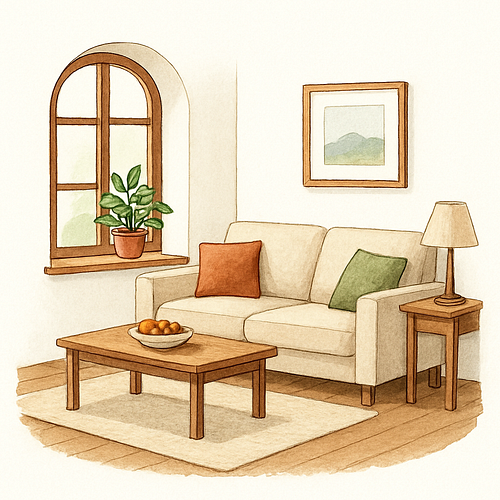
- Can you describe your room using c’è / ci sono at least five times?
- What is there in your town that is not in your classmates’ towns?
- Does your language have a difference like the one between “c’è un libro” and “il libro è qui”?
A habit worth building
To fix the rule, write three sentences every evening about your room or your neighbourhood: one starting with c’è, one with ci sono and one with non c’è. After a week the plural will come naturally. When you feel confident, try these forms in real situations: at a restaurant (read the restaurant vocabulary) or when travelling (the airport and station vocabulary). And to describe the people you meet, revisit the possessive adjectives.
Want to practise with me?
Book a free trial lesson, take the level test and join the course waiting list, which is open.
Sources
- Treccani – Vocabolario, entry “Ci¹”
- Treccani, Lingua italiana, Domande e risposte – “Vorrei sapere se è corretto usare il verbo ‘se c’erano’?” (31 July 2017)
The distinction between “c’è” and “è”, the tables, the dialogue, the exercises and the advice come from my own teaching experience.
📚 Further reading
To practise this point with graded exercises and an answer key, I recommend:
- Italian Grammar in Practice (Susanna Nocchi, Alma Edizioni) – rules explained in English, with exercises, tests and games.
- Practice Makes Perfect: Complete Italian All-in-One (Marcel Danesi, McGraw Hill) – grammar and vocabulary in one workbook, with plenty of exercises.
Affiliate links · As an Amazon Associate I earn from qualifying purchases.